Integrating Blockchain Technology into a Digital Public Infrastructure (DPI)
Below is a comprehensive explanation of how blockchain can be leveraged for LEI implementation within a DPI framework, focusing on open-source platforms to ensure accessibility and scalability.

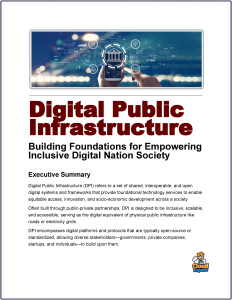 Integrating blockchain technology into a Digital Public Infrastructure (DPI) strategy for implementing Legal Entity Identifiers (LEIs) offers a transformative approach to creating a secure, transparent, and decentralized system for entity identification.
DPI encompasses shared digital systems like identity, payments, and data exchange, designed to be interoperable, inclusive, and aligned with public good principles.
Blockchain, with its decentralized, immutable, and transparent nature, aligns seamlessly with these goals, enhancing trust, security, and efficiency in LEI issuance, verification, and management.
Decentralized Ledgers
Blockchain’s core strength lies in its ability to provide a decentralized ledger that ensures data integrity and trust without relying on a single authority. For LEIs, which are 20-character alphanumeric codes based on the ISO 17442 standard for uniquely identifying legal entities, blockchain can serve as a backbone for issuing, storing, and verifying LEI records, including Level 1 (entity details) and Level 2 (ownership structures) data.
Open-source blockchain platforms like Hyperledger Fabric or Corda are particularly well-suited for DPI, as they support permissioned networks, enabling controlled access for regulators, Local Operating Units (LOUs), and other stakeholders while maintaining transparency.
These platforms can host the Global Legal Entity Identifier Foundation’s (GLEIF) open data tools, such as the verifiable LEI (vLEI) framework, which uses the Key Event Receipt Infrastructure (KERI) protocol for decentralized identity verification, ensuring secure and automated authentication of entities in digital transactions.
The implementation process begins with designing a blockchain-based architecture for LEI management. A permissioned blockchain, such as Hyperledger Fabric, can be deployed to create a decentralized network where GLEIF-accredited LOUs issue LEIs as smart contracts.
Smart Contracts
These smart contracts encode LEI data, including entity details and ownership hierarchies, and are stored immutably on the blockchain, ensuring tamper-proof records. Open-source tools like GLEIF’s Lenu (a Python library for assigning Entity Legal Form codes) can be integrated into the smart contract logic to automate LEI issuance.
The blockchain’s distributed nature allows stakeholders, such as regulators or financial institutions, to access the Global LEI Index in real time via open-source APIs, such as GLEIF’s LEI Search API, for verification purposes. This setup supports DPI use cases like cross-border payments, where LEIs embedded in ISO 20022 messages (as seen in the Bank of England’s CHAPS system) enhance transparency, and KYC/AML processes, where instant entity verification reduces costs.
Security and interoperability are critical for blockchain-based LEI systems within DPI. Open-source cryptography libraries like OpenSSL can secure LEI data within digital certificates or vLEIs, while decentralized identifiers (DIDs) and KERI ensure privacy-preserving authentication.
Blockchain platforms can integrate with existing DPI components, such as digital identity wallets (e.g., EU Digital Identity Wallet) or supply chain systems (e.g., EBSI-ELSA for intellectual property verification), using standards like OpenAPI or GLEIF’s mapping tools to link LEIs with identifiers like ISINs or OpenCorporates IDs.
Scalability is achieved through containerized deployments using open-source tools like Docker or Kubernetes, allowing the system to handle growing transaction volumes across jurisdictions. Data quality, a cornerstone of GLEIF’s framework, is maintained through automated smart contracts that enforce regular updates and renewals, leveraging GLEIF’s open-source challenge facility to crowdsource corrections.
Blockchain also addresses adoption challenges by reducing reliance on centralized intermediaries, lowering costs, and enabling transparent governance. By hosting LEI data on a public-permissioned blockchain, DPI systems can provide free access to the Global LEI Index, aligning with open data principles.
Regulatory mandates, such as requiring LEIs in crypto-asset reporting or ESG frameworks, can drive adoption, while public-private partnerships and open-source communities (e.g., GLEIF’s vLEI Hackathon, with submissions due August 29, 2025) foster innovation. Piloting blockchain-based LEI integration in DPI—for instance, embedding vLEIs in digital wallets or supply chain platforms—demonstrates practical benefits like faster payments and streamlined compliance, paving the way for global scaling through GLEIF’s LOU network.
Conclusion
In conclusion, blockchain technology enhances DPI by providing a decentralized, secure, and transparent platform for LEI implementation. Open-source platforms like Hyperledger Fabric, combined with GLEIF’s tools and KERI-based vLEIs, create a robust system for issuing, verifying, and managing LEIs, supporting DPI goals of inclusivity and trust.
By addressing challenges like interoperability, data quality, and adoption through open standards and collaboration, blockchain-based LEI systems can unlock significant value for digital economies, from cost savings in KYC (estimated at $2–4 billion annually by McKinsey) to transparent cross-border transactions.