Beth Simone Noveck | Unlocking Collective Intelligence: AI’s Role in Enhancing Democracy
Beth Noveck advocates using AI-augmented collective intelligence to transform government, harnessing citizen expertise for smarter, more collaborative digital services and democratic decision-making.

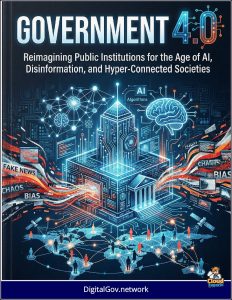 In an era of rapid technological change and increasingly complex public challenges—from climate resilience to equitable service delivery—traditional top-down models of government are showing their limits.
Citizens expect digital services that are not only efficient and accessible but also responsive to real-world needs.
Enter collective intelligence: the systematic harnessing of diverse citizen expertise, data, and input through digital platforms to inform, co-create, and improve government decision-making and service delivery. Far from crowdsourcing for its own sake, this approach structures public participation to solve specific problems at scale.
Few thinkers have shaped this vision more profoundly than Beth Simone Noveck. As director of The Governance Lab (The GovLab) and the Burnes Center for Social Change at Northeastern University, former White House Deputy Chief Technology Officer, and New Jersey’s first Chief Innovation Officer and Chief AI Strategist, Noveck has spent two decades demonstrating how technology can make government “work with the people, not just for them.”
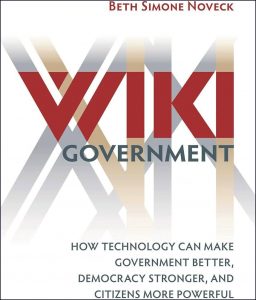 Her seminal books—Wiki Government: How Technology Can Make Government Better, Democracy Stronger, and Citizens More Powerful (2009) and Smart Citizens, Smarter State: The Technologies of Expertise and the Future of Governing (2015)—
along with her more recent work on “Democratic AI” in Reboot: AI and the Race to Save Democracy (2026), provide both the theory and practical blueprints for transforming digital government services.
From Closed Systems to Collaborative Expertise
Noveck’s core insight, first articulated in Wiki Government, is that the complexity of modern governance exceeds the capacity of any single agency or expert class. Governments possess authority and resources, but citizens hold distributed knowledge—specialized skills, lived experience, and real-time data—that can dramatically improve outcomes.
Digital tools enable what she calls “collaborative democracy”: structured networks that connect this expertise directly to decision-makers.
Her landmark project, Peer-to-Patent, launched in 2007 as the U.S. Patent and Trademark Office’s first social networking initiative, remains the gold standard. Patent examiners, overwhelmed by technical applications and limited time, traditionally worked in isolation.
Peer-to-Patent invited volunteer scientists, engineers, and technologists to review applications online and submit prior art (existing inventions that could invalidate a claim). Contributions were not open-ended opinions but targeted, claim-specific evidence.
The result? Higher-quality patent reviews, faster processing, and a proof-of-concept that collective intelligence could be operationalized within bureaucratic systems. The program expanded internationally to the UK, Japan, South Korea, and Australia, showing its replicability.
This model directly addresses a persistent pain point in digital government: services built on incomplete information. Whether it’s updating unemployment systems, designing benefit portals, or responding to public health crises, agencies often lack the granular, on-the-ground insights needed for effective implementation.
Noveck’s follow-up work in Smart Citizens, Smarter State expands this idea with “technologies of expertise”—digital platforms, algorithms, and processes that match the supply of citizen knowledge to the demand of government problems. These tools go beyond generic comment portals to create searchable expert networks, structured deliberation formats, and feedback loops that integrate input into workflows.
Digital Services Reimagined: Practical Transformations
Collective intelligence is already reshaping core digital government services in measurable ways:
- Service Design and Delivery: In New Jersey, under Noveck’s leadership as Chief Innovation Officer, the Office of Innovation used open data and citizen input to modernize unemployment insurance, streamline business permitting, and improve benefit uptake. Real-time data collection during COVID-19—gathered partly through public channels—enabled faster, more targeted responses. Similar approaches today leverage AI to analyze citizen-submitted data at scale while preserving privacy and structure.
- Policy and Regulation: Noveck’s concept of “Crowdlaw” extends collective intelligence to lawmaking. Legislatures in Brazil, Chile, and elsewhere have piloted platforms where citizens submit evidence, questions, and solutions for committee hearings. AI now enhances this by summarizing vast inputs, translating languages, and surfacing patterns—turning performative consultations into consequential ones.
- AI-Augmented Engagement: Noveck’s current focus at The GovLab and through InnovateUS (a free training program for public servants) emphasizes “Democratic AI.” Rather than replacing human judgment, AI acts as a facilitator: chatbots guide first-time participants, natural-language processing clusters similar comments, and agentic AI systems help coordinate follow-up actions. Her 2026 book Reboot argues that combining artificial and collective intelligence can make participation more accessible, scalable, and trustworthy—provided it is designed with human oversight and transparency at the core.
These transformations yield tangible benefits: faster service iteration, reduced administrative burden, greater legitimacy (citizens trust processes they help shape), and more equitable outcomes (diverse voices counterbalance institutional blind spots).
Challenges and Guardrails
Noveck is candid that collective intelligence is not a panacea. Without careful design, digital platforms can amplify bias, favor the loudest voices, or create “garbage in, garbage out” scenarios.
Key risks include the digital divide, low-quality or adversarial input, and the difficulty of integrating unstructured feedback into legacy systems. Her solutions are pragmatic: structure participation around specific questions (as in Peer-to-Patent), use clear moderation protocols, provide training for public servants (via InnovateUS), and embed accountability mechanisms like transparent algorithms and human review.
She also stresses institutional readiness. Governments must invest in “public entrepreneurship”—training officials not just in technology but in facilitation, data literacy, and iterative design.
The Road Ahead
As governments worldwide race to digitize services amid fiscal pressures and rising citizen expectations, Noveck’s framework offers a proven path forward. Digital government should not merely replicate paper processes online; it must evolve into a collaborative ecosystem where collective intelligence—amplified, when appropriate, by responsible AI—becomes the default operating model.
Her work through The GovLab, AI for Impact projects, and global partnerships shows that this future is already being built: one structured question, one expert network, and one improved service at a time. By embracing the principles in Wiki Government, Smart Citizens, Smarter State, and her ongoing Democratic AI initiatives, public institutions can deliver services that are smarter, more legitimate, and genuinely citizen-powered.
The transformation is not technological alone—it is cultural and institutional. As Noveck reminds us, the goal is not to crowdsource everything, but to build systems that intelligently tap the collective wisdom already present in our societies. In doing so, digital government services can move from reactive administration to proactive, adaptive governance—better equipped to meet the challenges of the 21st century.