The 22-Minute Miracle: How Ireland’s New AI Strategy is Reimagining Healthcare by 2030
Ireland’s “AI for Care” strategy integrates ethical AI into healthcare to speed up stroke diagnosis by 22 minutes, automate administrative tasks, empower patients with data control, and cut supply costs by 30%—while keeping human professionals central.

 Imagine a clock ticking in a silent emergency bay.
For a patient experiencing a stroke, that clock is a countdown: every second lost equates to two million brain cells dying.
In the high-stakes environment of the Irish Health Service, where 6,000 stroke patients are admitted annually, these seconds have historically been consumed by the necessary but time-consuming process of manual triage and image review.
However, a shift is underway that moves beyond mere incremental improvement. Ireland’s healthcare system is currently at a demographic crossroads; our population is aging at an unprecedented rate, with the 2022 census revealing a 22% increase in those over 65 since 2016, and forecasts predicting a further 30% rise.
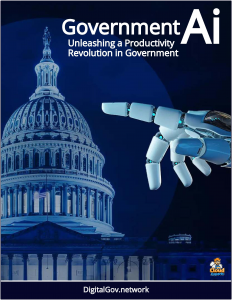
To meet this pressure, the Department of Health and the HSE have launched “AI for Care” (2026–2030)—a strategic framework that transitions artificial intelligence from the realm of science fiction into a grounded, essential tool for national survival.
This strategy is not about replacing the human touch; it is about protecting it. By integrating AI into the foundations of the “Digital for Care 2030” vision, Ireland is building a digitally connected ecosystem designed to handle the complexities of a modern population while maintaining the highest ethical standards.
|
 Download the
 Every Second Counts: The 22-Minute Stroke Intervention
The most visceral evidence of this strategy in action is found in the radiology suite. When a suspected stroke patient arrives, clinicians must immediately distinguish between a haemorrhagic stroke (a bleed) and an ischemic stroke (a clot). The treatment for one could be fatal for the other. Traditionally, this required a radiologist to manually parse through up to 2,000 images per scan.
Today, AI-driven decision-support tools can analyze those same CT scans within two minutes, flagging subtle blood traces or blockages with a level of precision that has increased clot detection rates by 100%. This intervention has accelerated care delivery by an average of 22 minutes. In the world of neurology, those 22 minutes represent the difference between a lifetime of disability and a successful recovery.
“Every minute saved can have a dramatic impact on a patient’s recovery and reduce the overall impact of a stroke for patients for their lifetime.”
You Are the Guardian: The Shift in Data Ownership
A fundamental pillar of this new era is a total reimagining of medical records. We are moving away from the “doctor-owned” model toward a partnership where patients are the guardians of their own health data.
Through the HSE Health App and the National Shared Care Record (NSCR), individuals will no longer be passive recipients of care but active managers of their personal health information. By allowing patients to control who accesses their data and providing them with the tools to understand it, the strategy builds the deep public trust required for a truly modern, data-driven health service.
Solving the Workforce Gap Without “Replacing” Humans
The looming “workforce gap” is perhaps the greatest challenge facing the state; projections suggest Ireland will need an additional 3,000 doctors and 9,000 nurses by 2035 just to maintain current service levels. The “AI for Care” strategy addresses this not by seeking to replace staff, but by utilizing the “Human in the Loop” principle to augment them.
The strategy focuses on “ambient listening technologies”—AI systems that can capture and summarize clinical encounters in real-time. By automating the administrative “heavy lifting” of documentation and discharge summaries, we can return clinicians to the bedside. When AI handles the “Support Operations,” it makes healthcare fundamentally more human by giving staff the gift of time.
“AI is complementary to the excellent and essential skills of healthcare professionals, and it is the combination of both is where we see the benefits.”
The Invisible Efficiency: 30% Savings in the Supply Chain
While clinical breakthroughs grab the headlines, some of the most impactful changes are happening in the “boring” back-office. In 2024, the government established the Productivity and Savings Taskforce to ensure health funding is maximized. A key finding was that AI-driven forecasting can revolutionize inventory management.
By using machine learning to predict seasonal demand and historical trends, hospitals have already demonstrated the ability to reduce inventory costs by up to 30%. These “invisible” savings are vital; they represent the recovered capital necessary to fund the 12,000 additional frontline staff required over the next decade.
Safety by Design: The EU AI Act and HIQA Mandate
Innovation without oversight is a risk the Irish health service refuses to take. The strategy is rigorously aligned with the EU AI Act, ensuring that clinical AI is treated with the same gravity as a physical medical device. Under this framework, high-risk systems must undergo mandatory fundamental rights impact assessments. Furthermore, HIQA’s forthcoming National Guidance will serve as a statutory North Star, ensuring that every algorithm deployed is ethical, transparent, and equitable. This “Safety by Design” approach ensures that as we adopt cutting-edge technology, we never lose sight of patient protection.
Conclusion: Toward a Digitally Connected Health Ecosystem
The 2026–2030 roadmap makes one thing certain: technology is the enabler, not the end goal. The success of “AI for Care” is inextricably linked to the broader “Digital for Care” vision—a future built on high-quality, interoperable data and a workforce empowered by intelligent tools. We are moving toward a personalized health service that responds in real-time to the needs of the individual.
As patients move from passive recipients to active “guardians” of their data, are we ready for the responsibility that comes with a truly personalized health service?