Government of Ireland – Digital Public Infrastructure at the Heart of Public Service Modernisation
Ireland's Digital Public Infrastructure is transforming public services: secure identity, interoperable systems, citizen-centric Life Events, and a bold Digital Public Services Plan 2030.

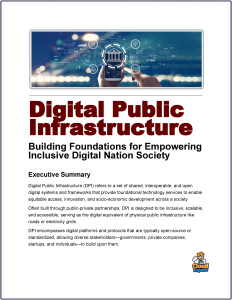 The Government of Ireland has placed Digital Public Infrastructure (DPI) at the heart of its public service modernisation efforts.
DPI refers to shared, secure, interoperable digital systems—such as digital identity platforms, data exchange mechanisms, and reusable building blocks—that enable efficient, inclusive delivery of public and private services.
Ireland’s initiatives build on existing foundations like MyGovID while introducing ambitious new components under two flagship strategies: the Digital Public Services Plan 2030 and the updated Digital Ireland – Connecting our People, Securing our Future National Digital & AI Strategy.
These efforts align Ireland with the EU’s Digital Decade targets and OECD recommendations for human-centred digital government. They aim to deliver simpler, faster, and more accessible interactions with the State, breaking down institutional silos through a “Life Events” approach that designs services around real-life moments rather than departmental structures.
Via their ‘Build to Share‘ program, led by the OGCIO, they provide reusable shared digital tools, platforms, and infrastructure—including gov.ie, Government Cloud, networks, data centres, and common applications—to eliminate duplication and boost efficiency across public bodies.
As the foundational ‘Government as a Platform’ layer, BTS directly supports the Digital Public Infrastructure in the 2030 Plan, enabling interoperable building blocks, secure data exchange, and seamless delivery of citizen-centric innovations like the Government Digital Wallet and Life Events services.
The Digital Public Services Plan 2030: Core Engine of Transformation
Launched on 10 November 2025 by Minister for Public Expenditure, Infrastructure, Public Service Reform and Digitalisation Jack Chambers and Minister of State for Public Procurement, Digitalisation and eGovernment Emer Higgins, the Digital Public Services Plan 2030 serves as the operational roadmap under the broader Better Public Services 2030 strategy.
Key targets by 2030:
- 100% of key public services available online (in line with the EU Digital Decade Policy Programme).
- 90% of applicable services (high-volume, high-impact services suitable for digital delivery) accessed digitally.
The plan identifies 189 key public services across 17 priority Life Events, including Birth of a Child, Starting School, Becoming Employed/Unemployed, Retiring, Accessing Social Housing, Starting a Business, and more. A baseline assessment in 2025 showed only 48% fully online; phased delivery will see 58% online by end-2026, with full integration targeted by 2028. Services are grouped into three 18-month phases, coordinated by lead Public Service Bodies (PSBs) with cross-government collaboration.
Central to the plan is the Life Events approach, which proactively bundles services (e.g., registering a birth and applying for child benefit in one seamless journey) and reduces administrative burden. A new Life Events Portal (integrated with MyGovID) will act as a central user dashboard for onboarding, messaging, digital journeys, and proactive service offers.
Foundational “Digital Building Blocks” and the Government Digital Wallet
The plan introduces universal digital building blocks—open, reusable, interoperable components provided by the Office of the Government Chief Information Officer (OGCIO) within the Department of Public Expenditure, Infrastructure, Public Service Reform and Digitalisation (DPER).
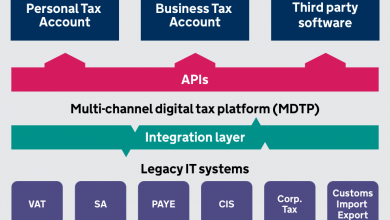
These form Ireland’s core DPI and include identity management, data infrastructure, payments, forms, analytics, journey builders, case management, and an Information Mediator for secure cross-government data sharing (adhering to the “once-only” principle and GDPR).
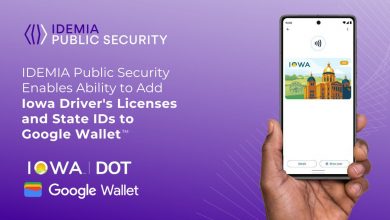
A flagship element is the Government Digital Wallet: a secure, EU Digital Identity (EUDI) Wallet-compliant platform for storing, managing, and selectively sharing authenticated digital documents and credentials. Users will control their data with opt-in sharing and privacy safeguards.
Pilots have already succeeded for Life Event services; a final security review precedes full rollout. The Wallet integrates with the Life Events Portal and supports both online and in-person verification, evolving MyGovID into a more comprehensive tool.
These building blocks explicitly underpin Ireland’s Digital Public Infrastructure, described as “Government as a Platform” for scalable, secure service delivery.
Supporting Enablers and Governance
Implementation is backed by a suite of enablers:
- Public Service Digital Transformation Fund (PSDTF): Funds cross-government projects using Life Events methodology and digital building blocks.
- Service Design Capability: Training programmes, design playbooks, standards, a central design team, and a Community of Practice (rolling out 2025–2028).
- AI Adoption: Guidelines, training, procurement supports, and showcases for responsible AI use in services.
- Bilingual Services: Technical working group and guidelines to meet Official Languages Act requirements in Irish and English.
- Digital Inclusion: Alignment with Ireland’s Digital Inclusion Roadmap to ensure accessibility and assisted channels for all citizens.
Governance falls under Better Public Services structures, with DPER providing central oversight, Life Events Working Groups for coordination, quarterly reporting via ePPM tools, and iterative reviews.
Integration with Digital Ireland Strategy: A Whole-of-Government Vision
The February 2026 Digital Ireland – Connecting our People, Securing our Future strategy embeds DPI within five mutually reinforcing ambitions: Apply, Grow, Invest, Lead, and Empower. Under the Apply ambition (“A Digital Public Service”), it explicitly commits to Ireland’s DPI, the new Public Service Data Strategy 2030, and ensuring all new legislation is “digital-ready.” It directly supports the Digital Public Services Plan 2030, Life Events redesign, and the Government Digital Wallet.
The Invest ambition strengthens underlying infrastructure:
- Updated Digital Connectivity Strategy and completion of the National Broadband Plan for gigabit broadband to every premise.
- New subsea cable routes for international connectivity.
- Enhanced cybersecurity and resilience for networks and cables.
- Advanced computing growth via the CASPIr supercomputer, Ireland’s AI Factory Antenna, and pilots in 5G Standalone and quantum technologies.
Additional commitments include a GovTech 2026 Challenge, AI training for all public servants, and sectoral strategies (e.g., Digital for Care 2030 in health).
Why It Matters: Building Trust, Efficiency, and Inclusion
Minister Chambers described the Plan as “not simply a technology roadmap, it is a Public Service reform roadmap,” emphasising people-centred design to build trust and improve outcomes. Minister Higgins highlighted the Life Events approach as a “milestone in our journey towards a truly digital-first government.”
Ireland’s ranking of 7th in the OECD’s 2025 Digital Government Index underscores its strong starting position. By treating DPI as foundational shared infrastructure—rather than siloed departmental systems—the government aims to reduce duplication, enhance data security, drive efficiency savings, and ensure no one is left behind through universal design and inclusion measures.
These initiatives position Ireland as a competitive digital leader in Europe while delivering tangible benefits: faster access to benefits, reduced paperwork, proactive support during life transitions, and a resilient digital backbone for future innovations like AI-driven personalisation.
As implementation rolls out from 2026, with ongoing public consultation and monitoring, Ireland’s DPI model demonstrates a balanced approach: ambitious digital transformation grounded in privacy, inclusion, and interoperability. The coming years will test delivery, but the framework is clear—by 2030, interacting with the Irish State will be simpler, faster, and more accessible for all.