Alastria Blockchain Platform: Architecting an ‘EU 4.0’ Pan-European Digital Economy
Alastria is Spain’s leading public-permissioned blockchain platform, powering a collaborative ecosystem for digital identity, tokenization, and cross-border services aligned with EU 4.0 goals, EBSI, and eIDAS 2.0.

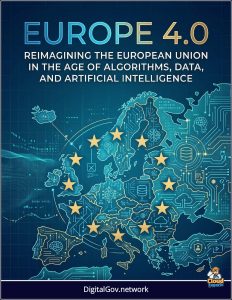 In an era defined by data sovereignty, seamless cross-border transactions, and decentralized trust, the European Union is navigating its most ambitious digital transformation yet.
While “Industry 4.0” revolutionized manufacturing through cyber-physical systems and IoT, “EU 4.0” represents the next frontier: a fully integrated, blockchain-powered pan-European digital economy.
This vision encompasses the Digital Single Market, the Digital Decade 2030 targets, eIDAS 2.0 for digital identities, and the European Blockchain Services Infrastructure (EBSI).
At its core is the need for interoperable, regulation-aligned decentralized technologies that empower citizens, businesses, and governments while ensuring privacy, traceability, and sustainability.
Enter Alastria: one of the world’s largest public-permissioned, multi-sector blockchain platforms. Founded in 2017 as a Spanish non-profit association, Alastria has grown into a collaborative ecosystem with over 500 members spanning businesses (from SMEs to multinationals like Banco Santander, Repsol, and Telefónica), academia, and public administrations.
It serves as a neutral hub for responsible innovation, democratizing access to blockchain and fostering real-world use cases that directly support the EU’s digital sovereignty goals.
From National Consortium to European Enabler
Alastria’s model—public-permissioned—strikes a balance between openness and control. Unlike fully public blockchains (vulnerable to spam or speculation) or private ones (lacking network effects), it enables permissioned participation while maintaining decentralization. Members collaborate through specialized committees on technology strategy, digital identity, legal frameworks, standardization, ESG, and sector-specific challenges (e.g., finance, logistics, energy, health).
Crucially, Alastria is not isolated to Spain. It actively engages in pan-European initiatives as a benchmark participant in the European Blockchain Partnership (EBP), the European Self-Sovereign Identity Framework (ESSIF), and the International Association for Trusted Blockchain Applications (INATBA). Its digital identity model, Alastria ID (also known as ID_Alastria), has become a de facto standard.
Developed collaboratively and aligned with W3C Verifiable Credentials and GDPR, it has influenced EU-level efforts and been formalized as UNE 71307 in Spain, with proposals advancing to CEN/CENELEC. In 2025, Alastria submitted formal contributions to the European Commission on eIDAS 2.0 implementing acts, advocating for stronger regulatory scaffolding around W3C Verifiable Credentials to accelerate adoption of the European Digital Identity (EUDI) Wallet ecosystem.
This positions Alastria as a bridge between national innovation and EU-wide infrastructure. Its work on standards for digital identity, interoperability, and tokenization ensures that solutions developed in Spain can scale seamlessly across borders—key to unlocking the estimated trillions in value from a true digital single market.
ISBE: Spain’s Node in the European Blockchain Web
A flagship example is the Blockchain Services Infrastructure of Spain (ISBE), launched in 2025 under the EU’s Next Generation Recovery and Resilience Plan. Led by the Community of Madrid and technically governed by Alastria, ISBE deploys the first national, public, interoperable blockchain network explicitly aligned with EBSI. It enables public and private entities to run nodes, deploy use cases in digital identity, traceability, process automation, and sustainability, and measure carbon footprints for circular economy models.
ISBE is more than infrastructure; it is a practical manifestation of EU 4.0 principles. By complementing EBSI’s peer-to-peer network (connecting all 27 EU member states plus Norway and Liechtenstein), it fosters cross-border services while preserving national control. Alastria’s expertise in public-permissioned networks ensures compliance with EU standards for digital trust, security, and sustainability.
Expected outcomes include boosted SME competitiveness, new tokenized asset models (projected to represent 10% of global GDP by 2030), and enhanced public services—directly advancing the EU’s goals of innovation, resilience, and green transition.
Driving Real-World Use Cases Across the Digital Economy
Alastria’s strength lies in its multisector deployment of dozens of blockchain projects. Members have built solutions in banking and finance (e.g., secure payments and asset tokenization), real estate (property registries), transport and logistics (supply chain traceability), agrifood (provenance and sustainability tracking), health (secure data sharing), education (credential verification), and culture (NFTs and digital rights management).
These use cases embody EU 4.0 by:
- Enhancing trust and efficiency: Blockchain’s immutability reduces fraud and intermediaries in cross-border trade and finance.
- Empowering self-sovereign identity: Alastria ID and projects like Dalion (a consortium-backed digital identity app involving major banks and insurers) give users control over personal data via mobile apps, aligning perfectly with eIDAS 2.0’s EUDI Wallet rollout.
- Promoting sustainability: ESG-focused committees and tools support carbon tracking and green certifications, tying into the EU’s Carbon Border Adjustment Mechanism (CBAM) and Digital Product Passports.
- Fostering inclusion: By lowering barriers for SMEs through shared infrastructure, Alastria helps smaller players participate in the tokenized economy and DeFi-adjacent regulated services under MiCA.
Recent activities, including Blockchain Awards recognizing projects in governance and competitiveness, underscore blockchain’s role as a “competitive advantage for the European economy.”
Challenges and the Path Forward
Realizing EU 4.0 is not without hurdles. Regulatory harmonization (e.g., MiCA implementation), technical interoperability between national networks and EBSI, and widespread adoption remain priorities. Alastria addresses these through its Legal and Standardization Committees, active participation in ISO, ITU, and EU forums, and events like “Joining Forces for Blockchain Standardisation 2026.”
Critically, Alastria’s public-private, regulation-first ethos avoids the pitfalls of unchecked crypto volatility while accelerating innovation. As tokenized assets and decentralized finance mature under EU rules, platforms like Alastria provide the trusted rails for a sovereign digital economy—reducing reliance on non-EU tech giants and enhancing Europe’s strategic autonomy.
Conclusion: Alastria as Catalyst for a Sovereign Digital Europe
Alastria is not merely a Spanish success story; it is a foundational building block for ‘EU 4.0.’ By delivering interoperable infrastructure (ISBE-EBSI alignment), pioneering digital identity standards that feed directly into eIDAS 2.0, and enabling multisector use cases that drive efficiency, sustainability, and inclusion, Alastria helps weave a decentralized fabric across the continent.
In a world of geopolitical digital tensions, this collaborative model—democratizing blockchain while staying firmly within EU values of privacy, transparency, and competitiveness—positions Europe to lead the next industrial (and digital) revolution. As more member states develop similar national infrastructures and as Alastria continues to scale its influence through EBP and beyond, the pan-European digital economy moves from vision to reality.
The blockchain revolution in Europe is happening—not in isolated silos, but through platforms like Alastria that connect knowledge, innovation, and regulation. The result? A more resilient, prosperous, and sovereign EU 4.0.