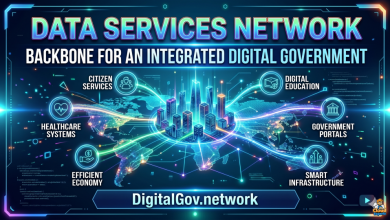
India’s Aadhaar System: A Foundational Example of the Data Services Network
Aadhaar exemplifies a Data Services Network (DSN), providing a centralized 12-digit biometric ID for 1.4 billion residents, enabling consent-based authentication, secure data exchange, and efficient services like UPI and direct benefits, balancing scale, inclusion, and privacy.

 India’s Aadhaar system, managed by the Unique Identification Authority of India (UIDAI), stands as one of the world’s largest digital identity platforms, enrolling over 1.4 billion residents with a unique 12-digit number linked to biometrics and demographics.
While not an exact replica of Estonia’s X-Road, Aadhaar powerfully embodies the Data Services Network (DSN) blueprint—particularly its second pillar of standards for unified citizen records—while powering elements of the first pillar through open APIs and the broader India Stack ecosystem.
Together, these create a scalable, consent-driven infrastructure for secure data sharing and service delivery at population scale.
Pillar I: Data Exchange Platform – Powered by Aadhaar and India Stack
Aadhaar alone is not a fully decentralized peer-to-peer exchange like X-Road (which routes data directly between agencies via security servers). Instead, it functions as a centralized identity service layer accessed through secure, API-driven channels:
- Authentication Ecosystem: Requesting entities (AUAs/KUAs) connect via licensed Authentication Service Agencies (ASAs) over private secure networks to UIDAI’s data centers. Every transaction is logged, encrypted, and consent-based; core biometrics are never shared.
- India Stack Integration: Aadhaar is the identity bedrock of India’s broader Digital Public Infrastructure (DPI), branded as the India Stack. This includes:
- Payments layer (UPI) for instant, interoperable transactions.
- Data empowerment layer via DEPA (Data Empowerment and Protection Architecture) and the Account Aggregator framework.
DEPA acts as India’s consent-based data exchange platform, analogous to X-Road. Account Aggregators (regulated intermediaries) facilitate real-time, end-to-end encrypted sharing of financial or other data without storing it themselves. Users grant granular, revocable consent via apps; data flows directly between providers (e.g., banks) and users (e.g., lenders) while Aadhaar authenticates identity.
Pillar II: Standards for Unified Citizen Records – Aadhaar as the “Foundation”
Aadhaar excels as a unified citizen record system. Every resident receives a single, lifetime digital identity anchored in:
- Unique identification and de-duplication: Biometric data (10 fingerprints, 2 iris scans, facial photo) plus demographics (name, DOB, gender, address) are stored in the centralized Central Identities Data Repository (CIDR). Advanced algorithms ensure one person, one ID, eliminating duplicates across India’s vast population.
- International standards for interoperability: It adopts ISO/IEC 19794 biometric interchange formats and CBEFF (Common Biometric Exchange Formats Framework) for packaging data, ensuring reliable, cross-system compatibility.
- Strong authentication mechanisms: Real-time services include demographic, biometric, OTP, or face-based verification. The e-KYC API allows authorized entities (with explicit consent) to receive a digitally signed package of demographics and photo—without storing raw biometrics locally.
This operationalizes the “once-only” principle: citizens enroll once, and agencies query the authoritative source via secure APIs rather than duplicating records. It reduces errors, fraud, and administrative burden while enabling seamless integration with services like banking, subsidies, tax filing, and telecom.
This creates a true network effect: Aadhaar provides the trusted “key” (unified records), while DEPA supplies the secure “pipes” for data exchange—mirroring the DSN’s interdependent pillars.
Synergies, Impact, and Distinctions
The combination delivers DSN-like outcomes at massive scale:
- Efficiency and Inclusion: Enables paperless KYC, direct benefit transfers, and credit access for the unbanked. UPI alone processes hundreds of billions of transactions annually.
- Privacy-by-Design Elements: Consent is mandatory for e-KYC/sharing; Aadhaar Data Vaults require entities to store numbers securely and separately; authentication records are auditable.
- Global Influence: India exports this model (e.g., MOSIP for identity, DEPA-inspired frameworks) as DPI, with collaborations like EU-India interoperability discussions.
Key distinctions from pure X-Road:
- Centralization vs. Decentralization: Aadhaar relies on a central CIDR for identity verification, while X-Road keeps data distributed across agencies.
- Scope: Aadhaar focuses on identity + authentication; DEPA extends it to broader, user-controlled data flows.
Critics note privacy risks in a centralized biometric repository, but regulations (Aadhaar Act 2016, data-sharing rules) and technical safeguards (no core biometric sharing, encryption) address many concerns.
Why Aadhaar Exemplifies the DSN Blueprint
Aadhaar is not just an ID card—it is the foundation of a national data services network. Its unified records pillar provides the standardized, verifiable identity backbone; its API ecosystem and India Stack’s DEPA deliver the exchange capabilities. The result is a citizen-centric system where data serves services, not silos: one enrollment unlocks seamless, secure, consent-based interactions across government and private sectors.
As nations build digital governments, Aadhaar demonstrates how a single identity layer can scale the DSN model to billions—delivering efficiency, inclusion, and innovation while evolving toward even stronger privacy protections. It proves the blueprint works, not just in small, high-trust settings like Estonia, but in the world’s largest democracy.